Tell Basta
HGC7+5X6، أمام منطقة تجنيد الزقازيق, El-Shohada، قسم أول الزقازيق، الشرقية 44513
0/5
0% of guests recommend
Wishlist
People interest: 0
Start Time
09:00 AM
Duration
5H
Location
Al-Sharkia
Description
Tell- Basta gets its name from the ancient Egyptian Per-Bastet “the house of goddess Bastet”, which was the cult center of the feline goddess Bastet. The latter, a lioness goddess, was associated with female fertility and played a main protective role.
Per-Bastet was the capital of the 18th Lower Egyptian nome (province) during the New Kingdom period (c.1550–1069 BC). It was also the capital of the country during the 22nd Dynasty (c.945–715 BC).
Its strategic position, in the eastern Delta, made it an important trade hub through which travelers could trade caravans to and from the Sinai and beyond. Most importantly, Bubastis was visited by the Holy Family during its journey to Egypt.
Per Bastet also features the temple of Bastet and the statue of Queen Meritamun, the once daughter and then wife of Ramesses II (c.1279–1213 BC). In addition, one can also find the remaining pillars of the 6th Dynasty temple of Pepi I (c.2289–2255 BC), a large palace of Amenemhat III (c.1855–1808 BC), and remains of a well dating to the Roman Period.
Tell Basta has a long history of excavations undertaken by both Egyptian and foreign missions. Édouard Naville excavated the temple of Bastet between 1887 and 1889, and then Labib Habachi discovered the temple of Pepi I in 1939. A colossal palace of Amenemhat III was excavated by the teams of the Supreme Council of Antiquities and Zagazig University directed by Shafiq Farid in the 1960s, by Ahmed el-Sawi around a decade later, and then by Mohammed Ibrahim Bakr in the late 1970s and 1980s.
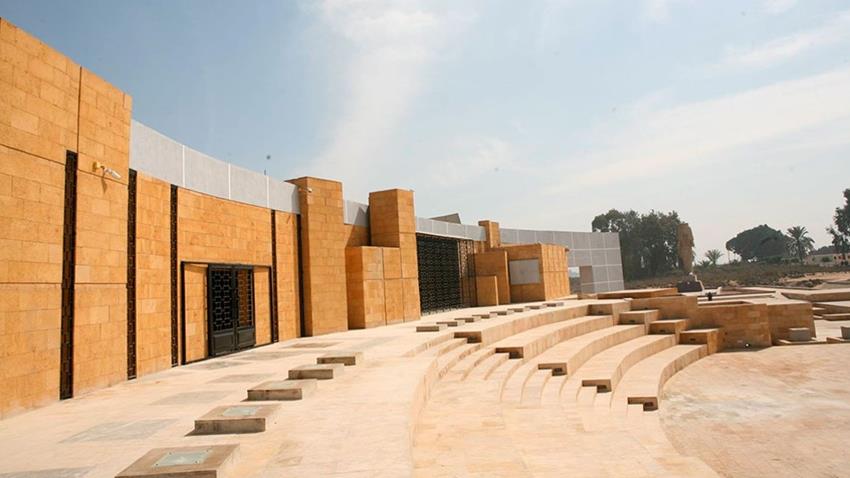
Open Air Museum
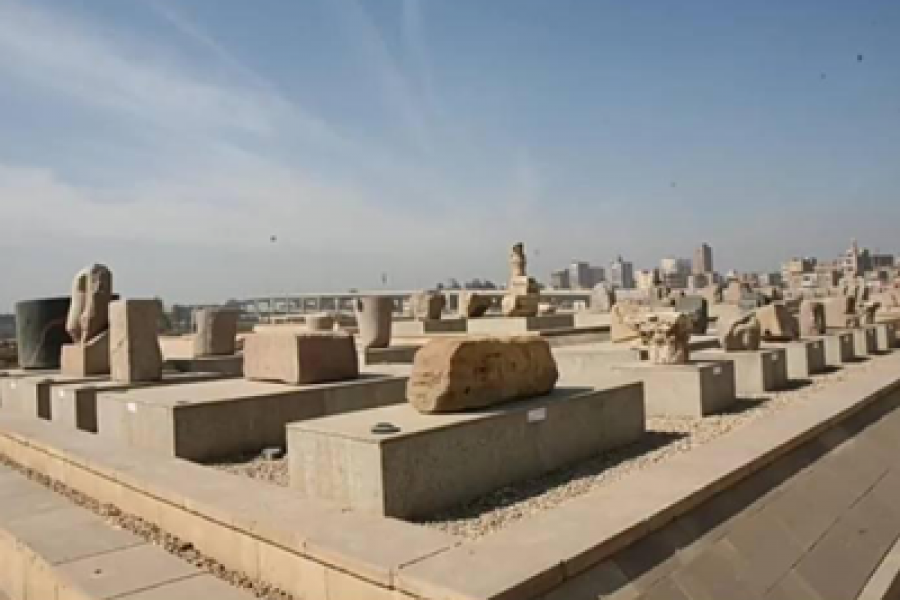
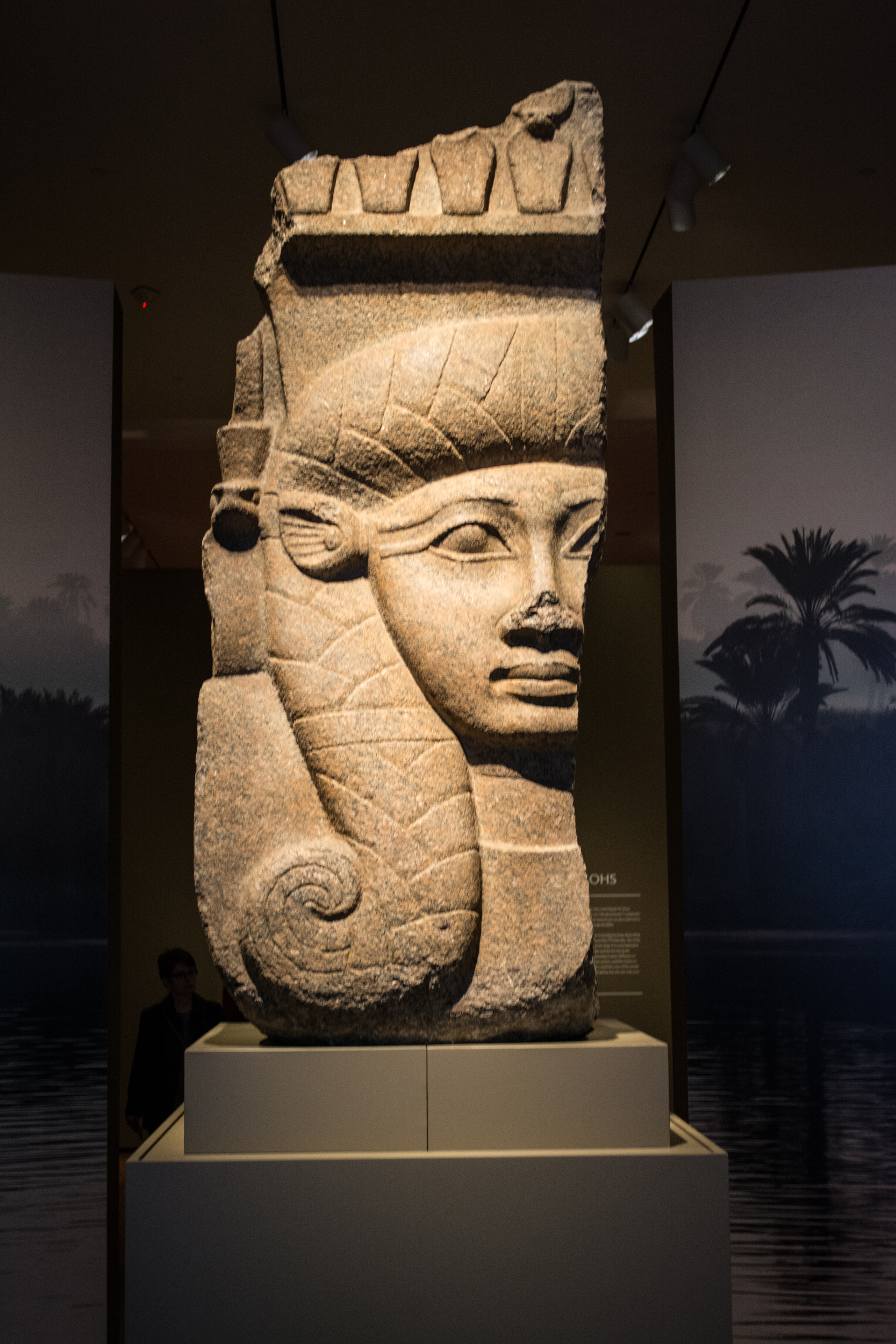
The successive excavations at the city of Bubastis (Tell Basta) have revealed many artifacts ranging from different sites and time periods. As there other various monuments at the site, it eventually was repurposed into an open air museum, including the black granite head of goddess Bastet in the form of a lioness, as a masterpiece.
In addition, one can find archaeological remains from the monumental gateway of the temple of Bastet, which was built by the 22nd Dynasty king Osorkon II (c.874–850 BC). This structure was entirely covered with depictions of Osorkon II celebrating the heb-sed Festival. Generally, this purely royal festival aimed to rejuvenate the king and renew his royal power.
At the site there is also a large amount of stone fragments bearing the names and epithets of kings. A sandstone block depicts a standard with human arms surmounted by the Ka-hieroglyph (in the shape of two upraised arms), and a king’s ‘Horus’ name was written inside. Although it was fragmentary, it contained the ‘Horus’ name of King Nectanebo II / Nekhthorhebyt (360–343 BC), the last king of the 30th and final Dynasty.
The open air museum also includes a group of statues of kings and deities. The most prominent is the red granite statue of the 19th Dynasty King Ramesses II (c.1279–1213 BC) standing between the goddess Hathor and the god Ptah. This, in turn, is found near a group of Graeco-Roman Period column capitals following the Corinthian style.

Place Type
 Archaeological Sites
Period
 Middle Kingdom 2055 - 1650 BC
Second Intermediate Period 1650 - 1550 BC
New Kingdom 1550 - 1069 BC
Location
Reviews
0/5
Not rated
Based on
0 review
Excellent
0
Very Good
0
Average
0
Poor
0
Terrible
0
No Review
Simple Bookings LLC

Member Since Dec 2022
from
$60
{{start_date_html}}
{{type.desc}}
{{type.display_price}} per ticket
Start Time:
{{time}}
Extra prices:
({{type.price_type}})
{{type.price_html}}
({{type.price_type}})
{{ type.price }}%
{{ formatMoney(type.price) }}
- {{total_price_html}}
- {{pay_now_price_html}}
from
$60